


Written by Dr. Michelle Meckelborg
A New Year means a new set of goals for most shelters. Why not look to the recently published guidelines from the Association of Shelter Veterinarians for Humane Rabbit Housing in Shelter for some actionable changes that won’t break the bank to improve your shelters rabbit husbandry practices?
The shelter world has witnessed the life-changing and life-saving impacts of housing in cats and dogs – from portals to dual housing. It’s time to invite change for our sensitive rabbit friends, who inherently, as a prey species, experience high levels of stress related to captive housing. Rabbits generally have a longer length of stay than their feline and canine counterparts, making it even more important to get housing right!
Here are some low hanging fruit take-aways that you can implement this month!
- Be realistic when setting the shelter’s housing capacity for rabbits. Use historical adoption data to determine the number of rabbits adopted per month combined with a realistic predicted length of stay. Use these numbers to inform the average number of rabbits in care at any given time, taking into account that “there are over 30 times as many pet dogs and cats as pet rabbits . Housing numbers should be similarly proportionate and reflect adoption metrics and average LOS”.
- Lights, Camera, Action – rabbits use light/dark cycles to dictate natural rhythms. Aim for sufficient nighttime darkness and avoid constant exposure to high light intensities during the day by using dimmable lighting systems on a timer system.
- Provide adequate resting/hiding areas to “allow for visual and light exposure choice for the rabbit occupants promotes coping with stress. The set-up also helps to balance the lighting needs of caretakers or potential adopters to be able to see into the enclosure”.
- Noise, noise, noise – intuitively, excessively loud and frequent exposure to noise adversely affects a rabbit’s well-being. Shelters are notoriously loud! Here are the strategies for reducing noise:
- Maximize space between rabbit and dog housing.
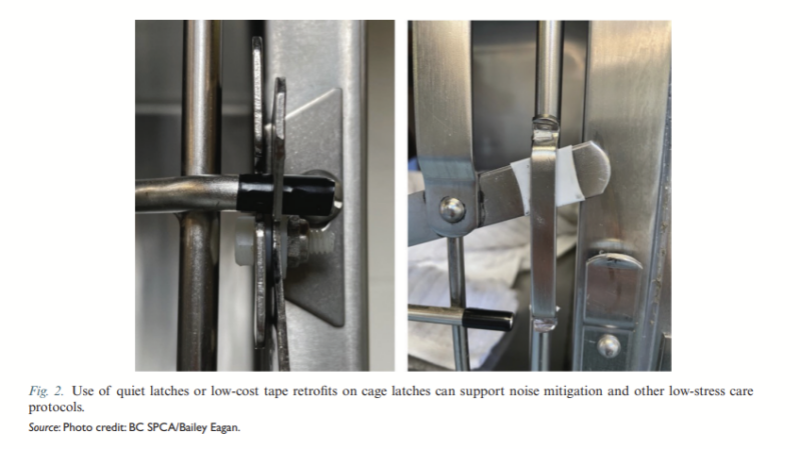
- Avoid or modify metal-on-metal contact surfaces to reduce the “clang” by performing low-cost tape retrofits on cage latches or investing in quiet latches.
- Educate staff and volunteers on appropriate conversation volume (low whisper) and gentle movements when performing daily care (no dish slamming).
- Hopppity, Hoppity, Hop – As per the ASV guidelines, “A humane housing unit for a rabbit allows them to rest fully outstretched without touching the walls (or other rabbits, if co-housed); turn around unimpeded; stand up fully on hind legs without ears touching the enclosure ceiling; and take an unhindered sequence of three consecutive hops” which generally equates to a minimum length enclosure of 9-10 ft long. As investment in appropriate sized housing may require a capital campaign, the low hanging fruit in this recommendation is to strive to provide rabbits daily access to a 33ft squared exercise pen for several hours. Even better – time this at dawn and dusk when rabbits are naturally the most active!
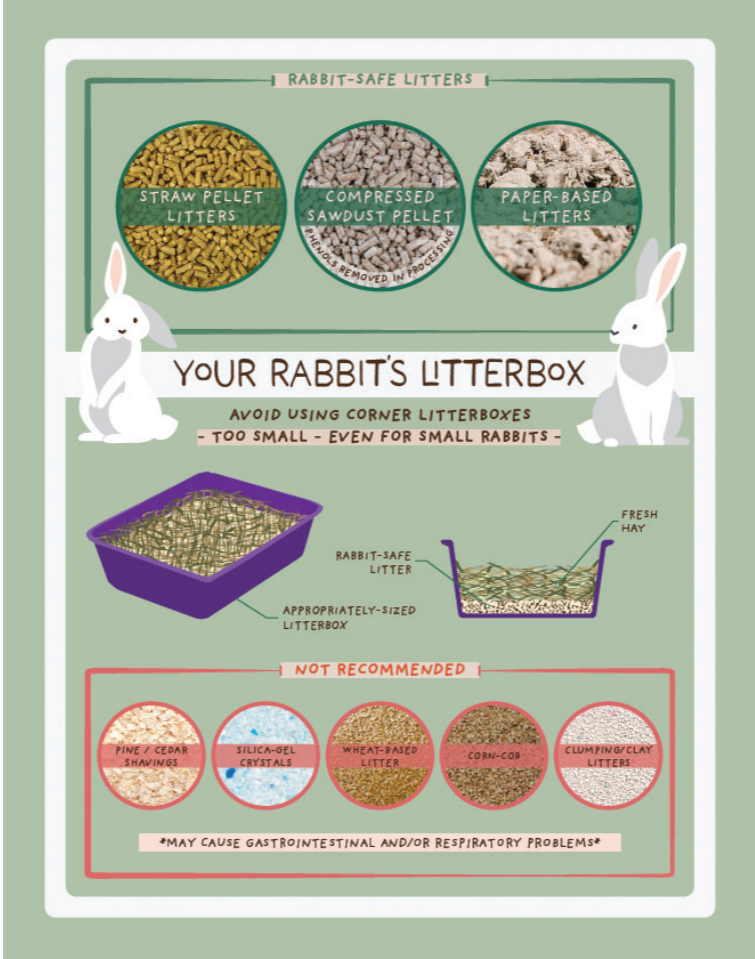
- Litterboxes.
- Should be as large as the rabbit is long.
- Should number at least one per rabbit.
- Should be located on the periphery of the enclosure.
- Should have hay readily accessible from the litterbox.
- Be flexible – move the box to the location the rabbit demonstrates a preference for.
To read the recommendations fully, please visit HERE.